
The Ultimate Proposal Guide: How to Propose Without Losing Your Mind
If you are reading this, there is a decent chance it is late, your search history has become a liability, and there may already be a small velvet box hidden somewhere you are now second-guessing. Deep breath. You are about to plan roughly thirty seconds that both of you will retell for the rest of your lives, and the internet’s advice for those thirty seconds ranges from “be yourself” (thank you, very helpful) to “rent a yacht and a string quartet” (thank you, very expensive). We photograph proposals for a living, which means we have professionally hidden behind more trees than we care to admit and watched hundreds of these moments actually happen.
Here is what all that lurking taught us, and it is the thesis of this whole guide: a great proposal is not produced, it is planned backward from one question, “what will make this specific person feel completely loved and completely comfortable?” Every decision, the location, the ring, the audience, whether a photographer is crouched nearby pretending to admire a shrub, flows from that answer. So let us walk through it in order, from the conversation that comes first to the champagne that comes after.
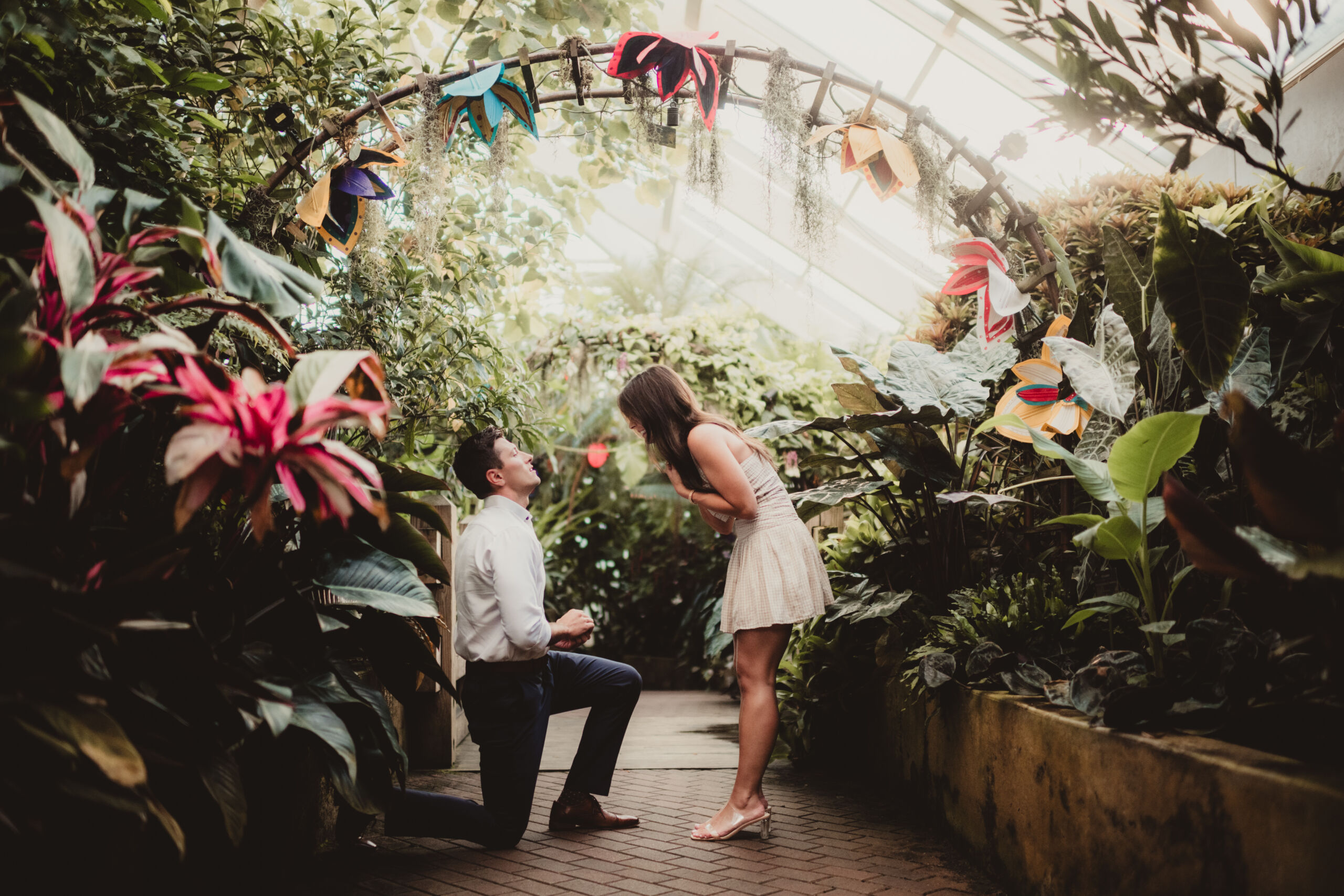
First, Be Sure: Surprise the Moment, Not the Question
The proposal can be a surprise. The idea of getting married should not be. Long before any ring shopping, you two should have talked about your future plainly enough that the answer is not in doubt: marriage, timing, what your lives look like together. Plenty of modern couples even shop for rings together and let the when and how stay a mystery, which works beautifully. Nothing deflates a proposal like genuine uncertainty, and from behind the camera we can tell you the best reactions come from people who knew the destination and were still floored by the arrival.
Design It for Them, Not for the Feed
Every proposal should be reverse-engineered from your partner’s personality, not from what performs well on Instagram. Some people dream of a big moment with friends and family hiding around the corner; others would rather change their name and move than be proposed to in front of a crowd. If you are not sure which one you love, err quiet and private, because nobody has ever been upset that a proposal was too intimate. And ignore the noise: those viral proposals with drone shots and choreography are frequently staged marketing, and the wedding industry has a financial interest in convincing you that bigger equals better. It does not. Thoughtful equals better. Bigger just equals bigger.
Location: Meaningful First, Photogenic Second
The best proposal locations mean something: where you had your first date, the trail you hike every fall, honestly, even the couch where you have watched four hundred episodes of television together counts, if that couch is where your life happens. Meaning first. Then, and only then, think like a photographer for a minute, because you can usually have both: if the spot is outdoors, aim for the hour before sunset, when the light is soft and golden and flattering, and have a weather backup you would actually be happy with. Around Madison, we are spoiled for options, from Lake Mendota shorelines to prairie overlooks, and we keep a running list of spots that deliver both privacy and gorgeous light. If your meaningful place and your beautiful place are different places, propose at the meaningful one; we can always photograph you at the beautiful one afterward.
The Ring, Without the Myths
If a ring is part of your plan, a few truths will save you money and grief. Start with the famous “three months’ salary” rule: it is not a tradition, it is an advertising campaign. De Beers invented it to sell diamonds, and you are under no obligation to fund their legacy. Spend what fits your life. The market has also changed dramatically in your favor: lab-grown diamonds are chemically identical to mined ones, fully mainstream, and cost a fraction of what they did even a few years ago, while moissanite, sapphires, and morganite make stunning alternatives, and independent jewelers do remarkable custom work at sane prices.
Practical matters: get close on the size by borrowing a ring they wear (right hand, same finger) and taking it to a jeweler, but do not lose sleep over precision, since propose-now, resize-after is standard practice. Insure the ring before it ever leaves the store, because a homeowner’s or renter’s policy rider costs little and covers the exact week you will be carrying precious cargo in a hoodie pocket. Speaking of which: the ring does not live in your car, your gym bag, or your jacket at the coat check. Ever. We should not have to say this, and yet.

The Moment Itself: Plan the First Thirty Seconds
Write down what you want to say. Not a monologue, three or four true sentences: why them, why forever, and the question. Say it out loud a few times beforehand, because nerves will eat half your vocabulary and rehearsal is what protects the other half. Handle the small logistics like a professional: which pocket the box lives in (front, on the side of the knee you will not drop to), a heads-up to the restaurant staff if you are proposing at dinner, a glance at the forecast if you are not. Then accept, right now, that something small will wobble. You will stumble on a word, the wind will do something rude, a jogger will pick the exact wrong moment to exist. None of it matters. Some of the best proposal photos we have ever taken feature happy tears, wind-destroyed hair, and one memorable photobombing golden retriever, and every one of those couples treasures the imperfection most.
Capturing It: How Proposal Photography Actually Works
Now the section we are most qualified to write. You have three options for documenting the moment, and they are not created equal. A friend with a phone gets you a shaky vertical video and a friend who is visibly terrible at acting casual. Skipping photos entirely is a legitimate choice, and if you make it, make it on purpose and be present. But if you want the moment itself, the hand over the mouth, the yes, the first embrace as engaged people, that is a job for a professional who knows how to be invisible, and here is how we actually do it.
We scout the location with you in advance and agree on an exact mark, down to “stop at the end of the stone wall, face the water.” On the day, we are already there, dressed like a tourist photographing the scenery, long lens doing the real work from a polite distance. You get a signal that we are set. You propose. We capture the whole sequence candidly, and then comes our favorite part: we walk over, introduce ourselves, and your brand-new fiancé(e) discovers the surprise has a second act, a just-engaged portrait session in that golden light, while the adrenaline and the joy are still doing their thing. Those twenty minutes routinely produce some of the most emotionally loud images we make all year, because nobody on earth photographs better than someone who said yes ten minutes ago.

Right After the Yes
Plan the landing, not just the launch. Whether it is a quiet dinner for two, champagne with the friends who were hiding nearby, or a FaceTime tour of both families, decide in advance how you want the first hours of being engaged to feel. Two pieces of etiquette earn their keep here. First, tell your closest people before the internet finds out; parents learning about an engagement from Instagram is a wound that stays weirdly fresh. Second, on the question of asking for a parent’s blessing beforehand: it is not required, and whether it is meaningful or outdated depends entirely on your partner and their family. Do what would make your partner feel honored. That is the only test, and it is the same test as everything else in this guide.

Proposal Planning FAQ
How far in advance should I plan a proposal?
Give yourself four to eight weeks for a proposal involving a custom ring, a specific location, or a photographer, since rings take time to make or size and good vendors book ahead. A simpler, private proposal can come together in a week or two. The conversation about marriage itself should come well before any of it.
Is hiring a proposal photographer worth it?
If the moment matters to you, yes. A professional captures the genuine reaction candidly from a distance, then turns the surprise into a just-engaged portrait session while the emotion is still at full volume. A friend with a phone usually delivers shaky footage and blows the secrecy trying to act natural.
How do I find my partner's ring size without them knowing?
Borrow a ring they already wear on the equivalent finger of the right hand and have a jeweler measure it, or quietly enlist a friend or family member. Close is good enough: proposing with a near-fit and resizing afterward is completely standard.
Do I need to spend three months' salary on the ring?
No. That guideline was a De Beers advertising campaign, not a tradition. Spend what fits your finances, and know that lab-grown diamonds, moissanite, and colored stones offer beautiful options at a fraction of historical prices.
How do I keep the proposal a secret?
Limit who knows, coordinate details in a channel your partner cannot see, disguise appointments as ordinary plans, and if a photographer is involved, let them handle the covert logistics, since staying unnoticed at proposals is literally part of the job.
We Will Be the Strangers Admiring the Shrubbery
Twig & Olive Photography plans and photographs proposals across Madison, Wisconsin and far beyond it, all 50 states and 20+ countries, from covert scouting to the just-engaged session that follows the yes. We are based at the historic Garver Feed Mill, 3241 Garver Green, Suite 200, Madison, WI 53704, and we take secret-keeping extremely seriously.
See how these moments look when nobody knows the camera is there in our photography portfolio, then reach out through our contact page or call 608-347-8028. We are happy to plan the whole covert operation over Zoom, by phone, or at the studio, and your secret is safe with us; ours is a business built on knowing about engagements before one of the engaged people does.